Why Europe’s Alpine Roads Are Some of the World’s Finest
Europe’s alpine roads have long occupied a special place in automotive culture. They are more than infrastructure. They are part of the mythology of driving itself.
Performance means different things depending on where you stand.
Certain roads stay with you long after the engine falls silent. Not because they are the fastest or the most technically demanding, but because of the way they make you feel while travelling through them. The rhythm of a sequence of corners. The change in light as elevation rises. The sense that each kilometre reveals something new just beyond the next ridge.
Europe’s alpine roads have long occupied a unique place in automotive culture. They are more than infrastructure. They are part of the mythology of driving itself.
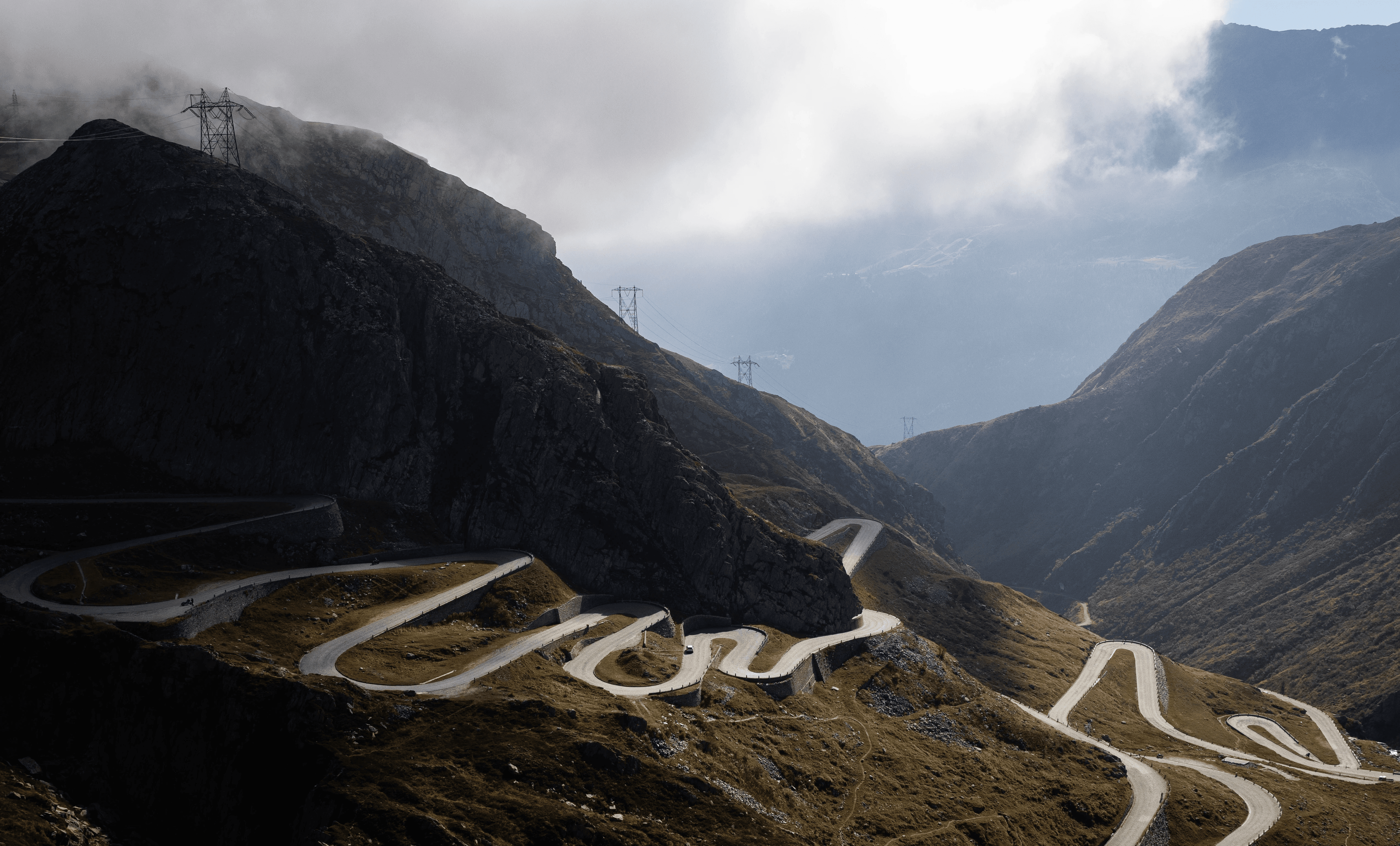
For decades, these mountain routes have shaped everything from grand touring to motorsport. Passes such as the Furka, Grimsel, Stelvio and Susten have become icons not simply because they are scenic, but because they combine technical precision with extraordinary surroundings in a way few places in the world can replicate.
A great alpine road constantly changes character. Tight switchbacks give way to open sweepers. Dense forests suddenly open into panoramic views across glaciers, lakes, and valleys. The road surface evolves with the landscape, requiring attention and involvement without ever feeling repetitive.
Despite their reputation, the best alpine roads are rarely about speed. The most memorable moments often come when the pace slows slightly. These are roads that reward awareness rather than aggression.
That is why they lend themselves so naturally to the Solenza approach.
Driving through alpine regions is not treated as an isolated activity, but as part of a wider rhythm. A morning spent crossing high passes might lead to lunch overlooking a vineyard terrace. An intense technical section might soften into a quiet lakeside arrival by late afternoon. The road shapes the journey, but never dominates it completely. This balance is part of what makes Europe so uniquely suited to this style of travel.
Within a relatively short distance, entire landscapes can transform. Switzerland offers precision and elevation, where roads feel engineered directly into the mountainside. Northern Italy introduces a softer rhythm, blending dramatic driving with warmth, lakeside towns, and a stronger sense of theatre. In the French Alps, long flowing sections connect remote villages and historic routes once defined by rallying.
The cars themselves experience these roads differently, too. A lightweight sports car transforms a technical mountain section into something instinctive and reactive. A grand tourer settles naturally into longer, flowing distances. A convertible changes the relationship entirely, opening the landscape to sound, temperature, and atmosphere in a way that feels immersive rather than observed.
This is why the multi-car format sits at the centre of every Solenza driving tour. The road stays the same, but the experience evolves with each change of car, revealing new perspectives across the same stretch of tarmac.
But ultimately, the appeal of alpine driving extends beyond the mechanics of the road itself. It is about movement. Exploration. The feeling of travelling through environments that seem designed to unfold gradually rather than reveal themselves all at once. Unlike a circuit, there is no repetition. The landscape is always changing, and with it, the experience behind the wheel.
In a world increasingly shaped by efficiency and speed, Alpine driving remains beautifully analogue. A reminder that the journey itself can still be the purpose. Roads can connect more than destinations. And that some of the greatest driving experiences in the world are not found at the limit.